Friday, 13 November 2015

Journalistic Context

There are many ways that a interview can be read or watched. this also means there are different types of interviews such as, print, television, online, sport, radio and feature writers. this means that you will have to go to the  interview with a different mind-set as there will be different things that the interviewer will want to get out of the interview.
Radio


The radio produce and interview as it is voice recorded with the interviewer. This then is cut into sound bites which allows the audience to listen to the key questions from the interview. Radio interviews are usually recorded in a studio or can be on the street (vox pops). After they can edit it on a computer. Now on radio broadcasters such as BBC radio 1, they now film the interviews with certain celebrities and interviewees. They upload this to YouTube or on their website. This allows the interviews to get a larger audience, as the radio is decreasing but the people who are not listening to the radio are watching clips on websites=. so they reach a more diverse audience.


television 
Media uses television to broadcast different types of news. Some of the main stories and types of news are shown on different shows such as entertainment, hard news and sports, human interest and investigative. The types of interviews would be more formal and less relaxed as they are trying to get the information and facts across to the audience. These will have different styles of broadcasting the news and will be broadcasted on different shows. Such as promotional interviews would be on shows which would be on prime time. Such as chat shows like graham Norton and Alan Carr who both have chats which have numerous guests use as self-promotion. These would be more relaxed like two friends speaking because this will make them feel more relaxed, which will make them open up more.
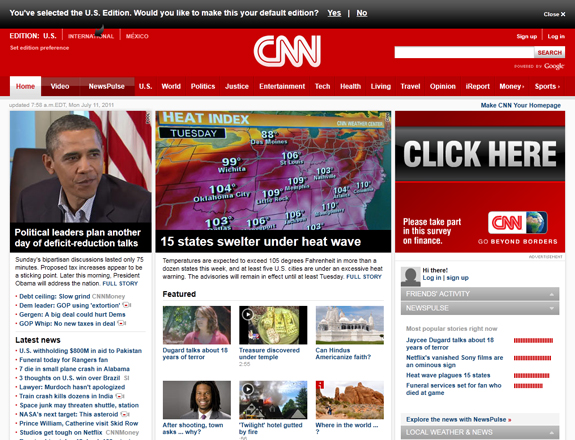
This is an example of a news type show which is on television. which show different types of news. so the interviews on this would be more formal such as if they interview politicians as they are trying to tell the public about the latest news stories.


Online
In recent years there are different there forms where you can share news one of these is online. You can look at all the different forms as now magazine and newspaper companies are now making them go online. This is to reach new customers as most people use the Internet or a tablet which is on the Internet. This means
sports
Sports Interviews are very quick and will be broadcasted over different forms such as on TV and the internet these will be short interviews after the match as people only get a small allocated time. some for around 3-5 minutes. So the questions need to be direct and need to get right to the key questions as there isn't much time to interview people and get the answers needed.


Monday, 2 November 2015

Stucturing

The structuring of the interview is very important. This is because the interviewer has to build up rapport and confidence. This ensures that the interviewer will get more in-depth answers to the questions which you really want. These would be called 'key questions' the other stages are;


• Introduction 
• Developmental
• Confidence building 
• Key questions 
• Sound Bites 
• Summary 
• Wind Up


Introduction
This is where the interviewer introduces the interviewee. This helps them to the audience to understand who the guest is. in the Alan Carr interview with Taylor Swift. he introduces her as the 'Biggest thing in pop this year'. He also gives her compliments this helps her to relax and builds up her confidence.
Developmental
developmental questions help build the confidence of the quest and help set the mood of the interview. This also allows them to ask questions which the interviewee might know. For example in the Taylor Swift and Alan Carr interview the developmental questions were  about her moving into her new house, also speaks about Gandalf and where did he go. She also receives a painting which is of Cats playing poker.
Confidence Building
Confidence Building questions are the questions which are asked before the key questions. These are needed so that the interviewee has more confidence and will answer the Key Questions as they might just refuse to ask them if there isn't any rapport in the interview. In the example of Taylor Swift and Alan Carr he speaks about her new album and about her fans going to her house to have a party for the release. These are confidence building questions as they are questions which that she will want to answer.
Key Questions
the Key Questions are the main part of the interview. These are the questions which everybody wants to hear the answers to. The key questions in the example of Alan Carr and Taylor Swift include questions on her album and her new single. This leads to a conversation about what influenced it and jive bunny. Then the questions are around her new music video, for her new single. These are asked because everybody wants to know the answers. These are answered due to the rapport which is built up through the developmental and confidence building questions.
Sound Bites
Sound bites are voice clips which are cut out from the key questions. This is that the interview can be cut down, which then can be played on radio or on the news. As on key 103 there cant be a clip which is longer than 15 seconds. 
Summary 
The summary is where the interview starts to come to an end. This is where they start to summaries the interview. In the example of Alan Carr and Taylor Swift the summary is when he says thank you to Taylor and Introduces her to sing her song and new single. 
Wind Up
The wind up is the end of the interview when the wrap it up. They usually leave on a good note this will keep the person as a contact. So even if you disagree if you politely end the interview this may help if you want to speak or reach out to them again. In the interview between Taylor and Alan, this is when she sings her song out. This shows a wind up as it is the end of the interview and that why she was there to promote her song. So he bigs it up so they have left on good terms. 


Tuesday, 20 October 2015

purpose of interview

There are many different purposes why an interview is taking place. This means that there will different techniques which you have to use to get the information and the answers which you want out of your interview. Some of these purposes of interview are:

  • Research
  • Understanding
  • Inform
  • Interpretive
  • Emotional


Research
Research interview is where the interviewer asks specific questions which allow them to learn about the subject which the interviewee has a knowledge. For Example if the interviewee was an expert the interviewer purpose would be a research interview. As wee want to know what the expert knows on the subject. 
Understanding
these types of interviews increases the audiences understanding of the issue. this is done by the interviewee talking about the subject which they know about. this could be speaking about a certain subject and the interview would be about that subject, this allows the interviewee to talk about. this will then allow the audience to understand the subject better.


Inform
Inform is an interview which the interviewee informing their opinion or view on a specific subject. These sort of interviews would be 


This interview is informative as it gives you some background information on Guardians of the Galaxy as well as the television show parks and recreation. he also informs the audience about certain points in the film, this may persuade them to go and watch the film. So this is an imformative interview as the interviewee informs the audience and the interviewer on a certain subject, which in this case is the film. 

Interpretive
the purpose of interpretive interview is to express or explain the interviewee opinion. So this purpose would allow the audience to learn more through the interviewee expressing there opinion. On a certain subject. an example of this interview Purpose would be the Bear Grylls interview with Piers Morgan.


5:13-6:23

This interview is an example of interpretive interview. This is it because as it shows the audience Bear Grylls' friends and wife's opinion on him and what he does. So this interview gives their opinions on what he does. Being this type of interview allows the audience to find out and understand their point of views and their opinions. This allows the interview be more formal as they are trey
Emotional  

An Emotional interview is getting the audience to see the story from someone else's point of view. So this sort of interview allows the interviewer to show the emotions they are feeling. These interviews would be more personal interviews and would be more informal as they will need to get them to open up about their emotions. So a combative style of interviewing wouldn't work. 

6:30-7:06

This is an emotional interview because it allows the audience to see how Angelina Jolie feels about a certain topic and issue. It shows that it is an Emotional Interview because she speaks about her operation and what she went through. she also speaks about why she did it. This also means that they will be more than likely to use more open questions which means that she can expand more in her answers. This allows the audience to know more indepth about what she is speaking about. 

Body Language

An interview could change by the type of body language which is shown from the interviewee and the interviewer. Open and good body language could allow an interview go well it also allows and interviewee open up which therefore makes them more than likely give you more detailed answers. The good body language includes active listening  , eye contact and sitting facing each other and could also be mirroring.

Active listening
Active listening ensures that the interviewee knows the interviewer is listening. They can do this by a number of ways which include the nod, also can do this by choosing questions depending on what they have answered before and even giving responses like 'sounds interesting' and 'oh tell me more'. This makes the interviewee feel more comfortable and makes them open up more as they know the interviewer is listening. This also makes them feel like someone is listening to them. This also allows them to open up more as they want to be listened to.

Eye contact
Eye contact is also a form of good body language as it allows the interviewee to feel like the interviewer is paying attention and they are interested. Which is a good example of body language as it allows the interview to build rapport. So this could help the Interviewee to open up more and answer Key Questions.

Mirroring
Another form of good/open body language is sitting facing each other or mirroring. This also makes the interviewee feel more comfortable and will also allow them to open up more, which then also creates them to answer more detailed answers. When they probably wouldn't if it was closed body language. As open language helps to create and build rapport. An example of mirroring is shown below


This still shot of Oprah interviewing Lindsey Lohan shows mirroring. This is what she shows in all her interviews. But we can see that she is mirroring Lindsey Lohan's body language. This helps Lindsey to feel more comfortable and will open up more. This is also an example of good body language because they are both open and they are facing each other. Also both look relaxed and have the arms open. This helps to build rapport which allows the interviewer to get  more personal information out of the interviewee.

Building Rapport
Building Rapport is when your body language and questions allow to build up a level of trust and understanding. you have to Build Rapport even if you don't agree with their opinions. with this it allows the interviewee to open up more and feel comfortable. which makes them answer more detailed and more emotion. An advantage of Building Rapport is that hey will become more comfortable. this will allow the interview to speak about more sensitive subjects. But a disadvantage is that it could become too informal and may go off topic.

Bad Body Language 
Bad body language could make the interview be very closed and the interviewee might not open up about anything which might make them walk out or refuse to answer questions. Examples of closed body language is when you have your arms crossed and you don't mirror them and don't have any eye contact and they don't face each other. So this is the opposite to Open body language so this has the opposite effect on the interview. An example of this is


This interview shows bad body language because he isn't looking at her this makes her somewhat feel like she is left out. This is why she goes mad and gets angry. To have a better interview instead of sitting in the middle of them he could of sat on the side. Such as Alan Carr and Graham Norton or Jonathan Ross do as the are sat to the side so they are not turning there back on one person when speaking to others. Like below where Jonathan Ross is sat to the side of the guests this allows the host to speak to all of the guests at the same time and not turn his back on any of them.
source: http://i.ytimg.com/vi/VPl__BQ1il4/maxresdefault.jpg


interview styles

In different interviews the interviewers use different styles to get different answers out of the interviewee. they do this depending on what is the topic and who is the interviewee and why they are there. the types of different interview styles are
Hard news
Hard news is news which effects peoples everyday lives it also is serious. Examples of this is politics, laws and war. These will be the hard hitting stories. Hard news stories are usually on the main stories on the news at 6.
Example
http://www.bbc.co.uk/iplayer/episode/b06gxyjw/bbc-news-at-ten-15102015
An example is the news at ten on the BBC these below are the stories which came up on this episode
NHS- the story about NHS is classified as a hard news story because the anything affecting the NHS affects us whether it be problems with care, more Doctors and Nurses signing up to active duty, or the NHS becoming a private sector
Crash- The plane crash is hard news because it directly affects the people related to those 270 people who have passed during the crash
The troop numbers will remain at 10,000 soldiers in Afghanistan reversing what the President had aimed- This affects international politics

Human interest
Human interest stories which also can be called soft news are when it doesn't affect peoples everyday lives but they are interested it. An example of this is royal baby.

This is an example of human interest as the royal baby isn't going to affect people everyday lives. But they are interested so it is Human Interest also known as soft news. 
Entertainment
Entertainment also might overlap with promotional; this is when the news or interview is with a celebrity. This is news and interviews which are there to entertain. These interviews would usually take place on shows such as Alan Carr and Graham Norton. They would be more casual and like you were speaking to a friend. 
An example of this is 'Angelina Jolie Interview on the today show.' Here she speaks about her family and marriage to Brad Pitt; she also speaks about her work in developing countries and the differences between her life and the families in the developing countries. 

Investigative 
Investigative news would be an interview which would be getting information and details into a story. This sort of interview would be about conspiracies or on big events and would be shown on documentaries which would be about the subject or event. 
Promotional
Entertainment interview would be or the entertainment for the audience. For example would be an interview with a celebrity. These interviews are similar to the promotional interview and sometimes overlap.
Example


An example of this is the interview of Chris Evans. This is because that he is speaking about his film and what was the filming experience like. Also they were speaking about what was the character like. All of these questions make the film become more popular and help make people want to see the film.

Combative
A combative style of interview is where the interviewer asks a question in an aggressive way. It also may be competitively asked or re worded and asked again. This is usually used on politicians and company managers. This is used because they have media training so they wouldn't answer the questions as they are trained to dodge the questions they don't want to answer. 


Sunday, 27 September 2015

Question Types

In an interview there are different types of questions, such as open and closed questions. The different question types bring out different answers out of the interview. As some get more detail and other questions will give one word answers. Depending on the wording of them.

 
Open questions
Open questions such as 'why did you choose this course?' They start with the five W's and the H. Which is what, when, why, who, where and how. These questions help make the interviewer get an answer which is more than one word and give more detail and explain what they mean. which can also be explained as qualitative answers that can be given. As it means detailed. Open questions are good because they give more detailed answered. As they can't really give a one word answer because the way the questions are worded are in a way that they can't. They do this by using the five W's and the H (what, where, who, when, why and how.) But the disadvantage of using a open question is that the interviewee might go off topic and if you haven't a got a lot of time such as after a football match then the interviewer might not get all the answers you want.


Examples of open questions
  • Why did you write the book?
  • How did you feel when you observed the match?
  • Where did the idea come fro for your latest book?
  • What do you think about the recent change in laws?

Closed questions
A closed question is where the interviewer can give a one word answer. An example of this is a question such as 'do you like Oreos?' This question gives you a one worded answer. as they are worded in a way which gives answers you quantative answers which can help you . But even though it doesn't give you as much detail in the answer you get. But you could use it to get information you get in a survey or a questionnaire. So you can get the information for studies and statics.

 
Examples of closed questions
  • Do you like football?
  • Would you want to go one Big Brother?
  • Do you like social media?
  • Have you been on twitter lately?
Examples
https://www.youtube.com/watch?v=p5DQ8qh1slQ&feature=player_embedded
this is an example of closed questions as she asks 'is this accurate?'  after watching the clip from Rihanna's interview. But he didn't answer and tried to get away from answering the questions.
Leading Questions
A leading question is a question which prompts or encourages a wanted answer. This is usually because the question is worded in a particular way. so overall a leading question is worded to manipulated the interviewee to provide the interviewer with a in-depth or desirable answer. An example of a leading question is 'do you have a good relationship with your mum?